Home
(Con)tested Knowledge: Production, Formation, and Deconstruction
Call for Papers for the IAPT Biennial Conference
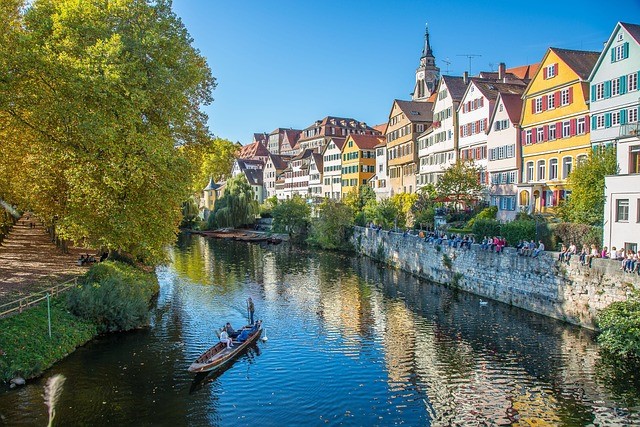
Where: Tübingen, Germany
When: April 01-05, 2027
Conference website: https://iapt-2027.de/ (submit your abstract proposal here)
Introduction:
The International Academy of Practical Theology invites submissions on the conference theme — (Con)tested Knowledge: Production, Formation, and Deconstruction.
Knowledge is multifaceted: it is produced in many places, it has many different contexts, follows different rules, and it is created and shared among individuals, groups and societies. In recent years, practical theology has explored various forms of religious knowledge, e.g. knowledge of the body, emotions and tacit knowledge, that nests in interactions and social practices. Knowledge, including religious knowledge, is essentially socially constructed and contextually bound. Religious communities like other social groups cultivate their own knowledge or way of thinking and thus adopt a particular perspective. Forms of knowledge therefore sometimes compete with and are contested by each other.
At the same time, prevailing understandings of knowledge have often been shaped by Eurocentric epistemologies that are historically entangled with colonial and imperial power structures. Decolonial and postcolonial scholarship has therefore emphasized the need to interrogate dominant epistemic frameworks and to attend to marginalized forms of knowing that emerge from different historical and social locations. As previous IAPT-conferences highlighted knowledge claims and power relations are intertwined and must be deconstructed, especially if they relate to discrimination, social inequity and climate crises.
We chose this topic against the backdrop of historical and contemporary challenges that we face in the German context. In the past, for example, there were strong links between throne and altar (anti-Semitism, nationalism, and anti-liberalism), which took shape in the authoritarian regimes of the 20th century (the Third Reich and the German Democratic Republic). Currently, we are experiencing in our multicultural society a new shift to the right and a resurgence of discrimination targeting societal minorities. The role of universities as places of knowledge production is also changing dramatically: technological development, economic relevance, and distribution struggles are threatening the humanities in general and the theologies in particular. Moreover, the global production of knowledge is embedded in capitalist structures that commodify knowledge and orient research toward economic value and profit-making.As different as these and other challenges may be, we think it is fruitful to address them using the lens of knowledge, and we are curious to learn more and exchange about how such dimensions play out in different contexts worldwide.
By (con)tested knowledge, we mean that knowledge does not exist unquestioned but is contested socially, culturally, and discursively. Religious knowledge represents a specific form of socially constructed knowledge that generates meaning, offers orientation, and provides identity within particular communities. It encompasses not only cognitive content but also embodied knowledge, affective dimensions, and implicit orientations that are conveyed through rituals, practices, and narrative self-relations. These forms of knowledge are not always compatible with dominant discourses and can exacerbate social issues—particularly when they legitimize inequality or reproduce normative exclusions. At the same time, they may also challenge hegemonic epistemologies and open up alternative ways of knowing that resist exclusionary or colonial forms of knowledge production.
The planned keynote sessions at the conference address three exemplary fields of (con)tested knowledge. We want to discuss how “Diversity and Decolonization” (1) transforms theological knowledge production today. We want to explore the relationship between religion and the current “Threat of Authoritarianism” (2). And we will discuss how the rapidly evolving “technological context of AI” (3) affects practical-theological research.
Submissions are encouraged on the following themes:
1) Knowledge Production: Knowledge production refers to the processes, practices, and conditions under which knowledge emerges, gains authority, and becomes institutionally and socially relevant. Within Practical Theology, knowledge is generated in diverse settings: in universities and theological faculties, but also in congregations, religious communities, activist movements, digital spaces, and through media communication. These sites are not neutral; they are shaped by historical trajectories, power relations, and epistemic norms.
Submissions may explore questions such as: Who has a say in theological knowledge production and what counts as a legitimate source of theological knowledge? What authority is attributed to narrative experience, to data, to embodied practices, or to AI-generated content? How do algorithmic processes and datafication influence the production, circulation, and validation of (religious) knowledge? What epistemic shifts are introduced by science communication, social media, and the mediation of theology in public spheres? In what ways does AI challenge or reinforce existing knowledge hierarchies?
2) Knowledge Formation: Knowledge formation is concerned with the processes of imparting, theorizing and institutionalizing knowledge. Knowledge is not only produced, but also shaped, passed on and transformed. Institutional framework conditions play a role just as important as the communication of knowledge to the public. Academic and popular forms of knowledge sometimes exist side by side without being connected to each other. The term theology is not reserved for the academic sphere but is used for theologizing in general. Different forms of knowledge can also compete. The spread of fake news and false knowledge is just as much a problem as a strong tendency to restrict the freedom of academia through political influence. In secularized societies, the formation of religious knowledge is controversial and must first prove its relevance.
Submissions are invited to reflect on academic freedom, science communication, fake news, political influence on higher education, and the relationship between academic theology and popular or lived forms of theologizing. How is religious knowledge formed, contested, or marginalized in contemporary contexts?
3) Knowledge Deconstruction: Knowledge deconstruction aims at a (self)critical reflection on persisting epistemic orders in lived religion as well as in the academic theological discourse. Religious forms of knowledge can have both emancipatory and exclusionary effects, especially when they reproduce identity-based structures, legitimize social hierarchies, or contribute to the stabilization of power relations. The task of deconstruction is to expose these problematics, make ambivalences visible, and open up alternative epistemologies grounded in plurality. This does not mean destruction or relativity but asking about the blind spots of theology as situated knowledge.
Submissions may address how theological knowledge claims are deconstructed without collapsing into relativism. How can we recognize and potentially transform theological patterns that sustain normative gender roles, authoritarian orders, or ethno-religious demarcations by referring to God, scriptures or sacred knowledge? What alternative epistemologies emerge from feminist, postcolonial and decolonial, ecological, or otherwise marginalized perspectives?
4) Open Slot: While the conference is structured around the three interrelated dimensions of (con)tested knowledge, the organizing committee explicitly welcomes submissions that do not fit neatly into these categories. Practical Theology is a dynamic and evolving field, and innovative, experimental, or exploratory contributions often emerge at the intersections—or outside—of established frameworks.
————————————————————————————————
The conference committee invites contributions from diverse cultural, disciplinary, and methodological perspectives. By placing these three dimensions of knowledge at its center, the conference creates a space for critical engagement with the epistemology of practical theology in a global perspective. It invites participants to question the conditions of theological knowledge, to explore new forms of knowledge generation, and to foster a transcultural dialogue on knowledge, power, and meaning.
Please submit your proposal
- via the conference website (https://iapt-2027.de/)
- with the required information (title, sub-theme 1-4, abstract of max. 300 words, membership status, affiliation, and contact information)
- by 30 June 2026
Authors will be notified about the acceptance of their proposals as soon as possible.
We will review the submissions continuously as we receive them. The paper sessions of the conference will be divided according to the four sub-themes.
We look forward to welcoming you in Tübingen!
The local committee: Erkan Binici, Eva Maria Daganato, Simon Linder, Hans-Ulrich Probst, Michael Schüßler, Lea Stolz, Fahimah Ulfat, Birgit Weyel
Email: IAPT-2027@ev-theologie.uni-tuebingen.de
Download a PDF version of this call for papers over here: IAPT 2027 Conference Call for Papers
Watch the video below to familiarise yourself with Tübingen, as prepared by our local host committee members. We look forward to hosting you in April 2027.